 Pass the Exam Easily with Detailed 3-Level Practice | 1-Day Full Access Free — Offer Ends in


Control signs
- 1/17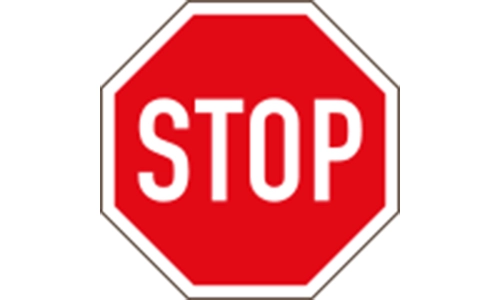
This sign means the driver must come to a complete stop at the line or intersection. Only proceed when the road ahead is completely clear and safe.
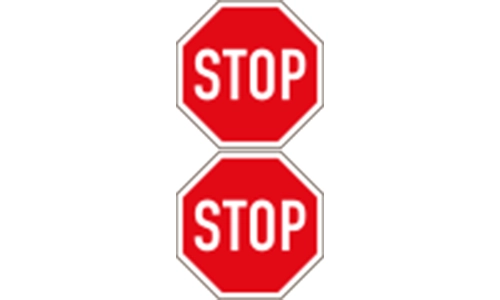
At this junction, two of the approaching roads are controlled by stop signs. Drivers must stop fully and check all directions before moving.
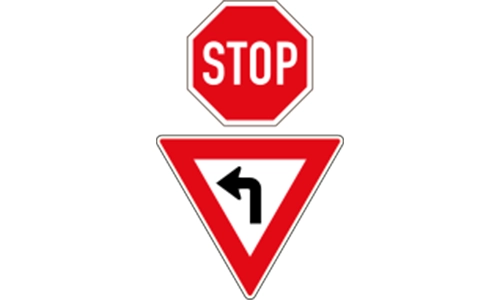
All drivers must stop, but those turning left must give way to other traffic or pedestrians. Proceed only when it’s safe to do so.
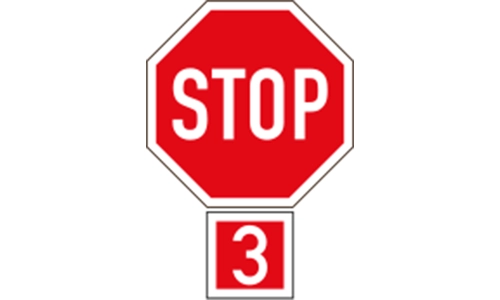
Three roads meet at this intersection and all vehicles from each direction must stop. Drivers must proceed in the order of arrival, with caution.
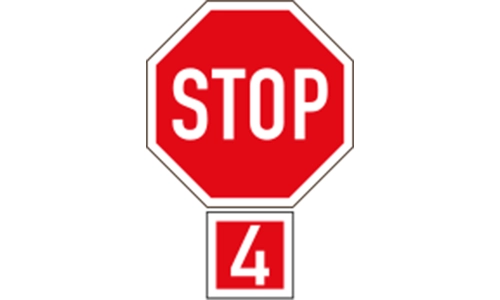
This indicates a four-way stop where vehicles from all directions must stop. The vehicle that stops first has the right to go first.
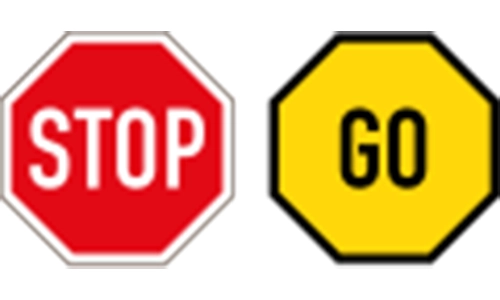
Used by road workers or officers to manually control traffic. Drivers must stop or proceed as directed by the handheld sign.
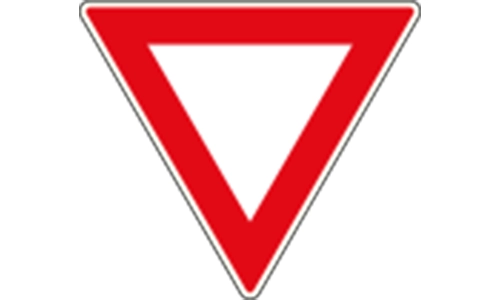
Drivers must slow down and prepare to stop if necessary. Right of way is given to traffic on the main road or at the junction.
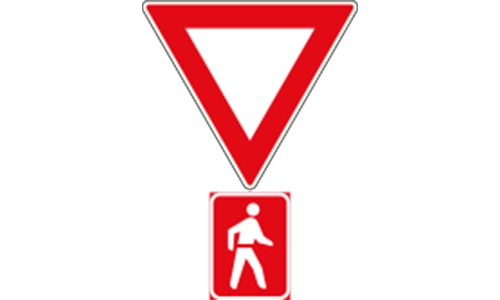
Drivers must give priority to people crossing the road. Wait until all pedestrians have safely crossed before moving forward.
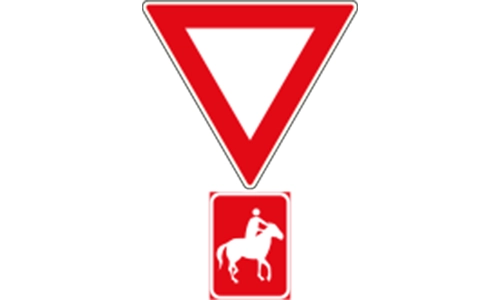
This sign instructs drivers to give way to horse riders on the road. Pass slowly and only when it is safe for both rider and horse.
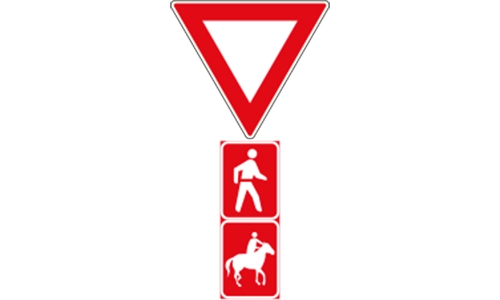
Vehicles must give way to both walkers and horse riders. This ensures safety in shared zones such as rural or mixed-use roads.
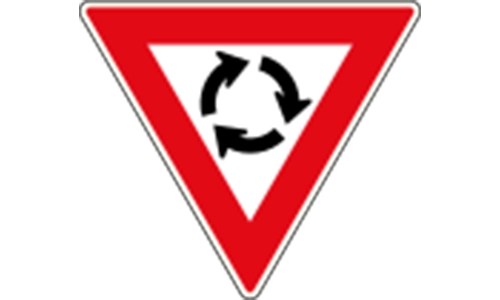
Drivers approaching a roundabout must slow down and check for traffic. Yield to vehicles already moving inside the roundabout.
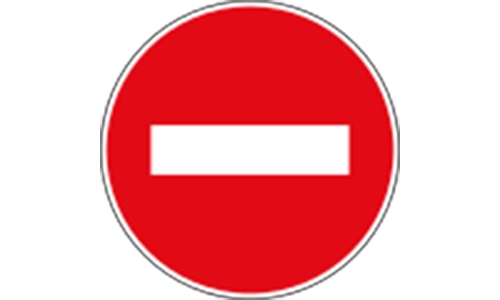
This is a regulatory sign that bans vehicles from entering the road or area. It helps control traffic direction and prevent wrong-way driving.

Indicates that all traffic must move only in the leftward direction. Vehicles entering from other directions are not permitted.

Only rightward movement is allowed on this road. Vehicles must follow the direction of the arrow or markings.
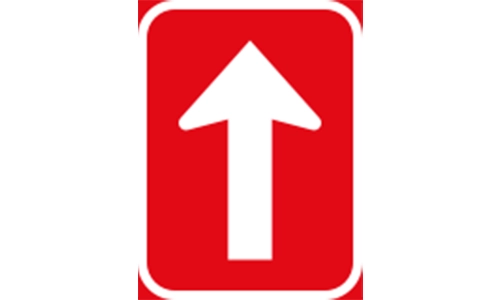
This sign confirms that the road allows movement in one single direction. Vehicles must not reverse or turn into opposing lanes.
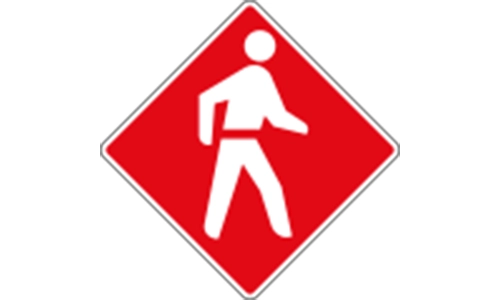
In this area, pedestrians have full right of way. Drivers must proceed at low speeds and stop when people are crossing.
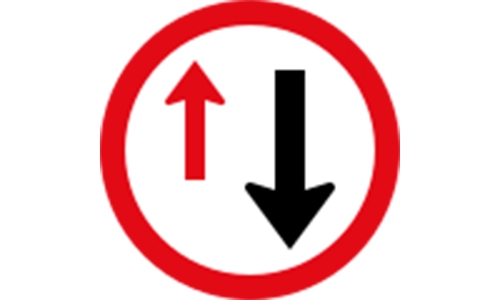
Drivers must allow vehicles coming from the opposite direction to pass first. This is common on narrow roads or bridge entries.